Gold in the Gulch
Prospectors discovered gold in the creek at Lower Rich Gulch and followed it uphill to a surface outcropping of quartz — the vein they would name the Paloma Ledge. Prospect holes were dug extensively across the area, many of which remain visible today in modern LiDAR imagery.
The Paloma Mine & the Town That Grew Around It
Dr. Hugh Toland — founder of the University of California Medical School — began developing the “Paloma Mine” with an inclined shaft that followed the quartz vein. Lacking the capital to operate and expand, Toland sold the mine to J.H. Alexander, who sank an additional shaft about 800 feet north of the original works and, in the 1860s, erected a 24-stamp mill. Roughly 36,000 tons of ore were processed, from which an estimated 17,500 ounces of gold were recovered.
Other mines soon opened along the Paloma Ledge — the North Paloma, Alexander, Smith, Messinger, Stemwinder, and Queen Consolidated among them. A small town took root on land just southwest of the gulch owned by Benjamin Franklin Foster. First called Fosteria, it was later renamed Paloma, growing into a moderate-sized town with its own post office, which stayed in operation until 1908.
A Senator's Mine
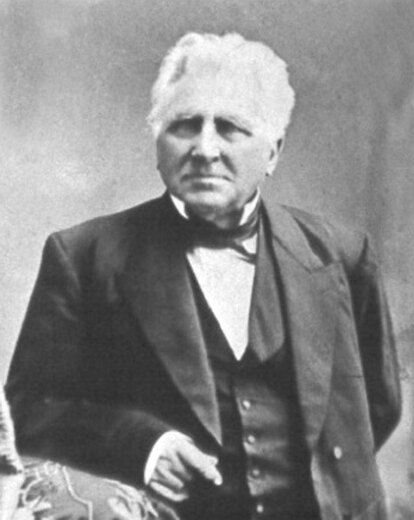
In 1867, William M. Gwin — a physician and sitting U.S. Senator (1850–1861) who, alongside John C. Frémont, served as one of California's first two U.S. Senators — purchased the mine from Alexander. Gwin went on to acquire additional properties and mines throughout Lower Rich Gulch, consolidating them to form the Gwin Mine.
The “Gwin” was run as a family business — in effect, a family piggy bank — and managed by Gwin's son, William M. Gwin Jr., later Shipping Commissioner at the Port of San Francisco, who proved an excellent mine manager. For much of the 1870s the Gwin was the most productive mine in Calaveras County, with the yield reaching as much as $1,000 in a single day, at a time when gold sold for under $20.00 an ounce.

“…had produced in all, over $2,000,000 dollars of Gold.” California State Mining Bureau — Sixth Annual Report of the State Mineralogist, 1886
Operations continued until 1882, when a “drowning of the pumps” flooded the mine. With the workings underwater, the shaft in need of rehabilitation, and the mills worn out, the Gwin family chose not to reopen. William Gwin Sr. passed away in 1885, and a few years later a fire destroyed most of the surface works, closing this chapter of the mine's history.
Detailed records were not always kept during the family's ownership, but some mill records and bank deposit receipts survive. According to the 1886 State Mineralogist report, the South Shaft had been sunk to a depth of 1,530 feet, with a second shaft started but reaching only 400 feet before closure. The property held two stamp mills — one of 24 stamps and one of 36 — and the mine “had produced in all, over $2,000,000 dollars of Gold.” Estimates place roughly 175,000 tons of ore milled and about 83,000 ounces of gold produced — not counting the “specimen gold” that both the Gwins and later owners wrote of, but which was never accounted for in the milling totals.
A New Chapter Under F.F. Thomas

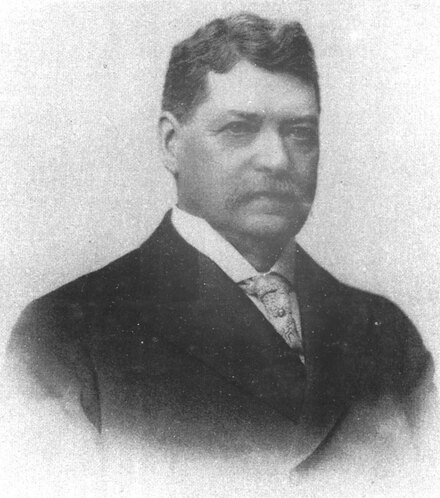
In February 1894, William M. Gwin Jr. signed a six-month bond agreement to sell the Gwin Mine to Frederick F. Thomas — a professional and highly experienced mining engineer and geologist. Thomas formed and incorporated the Gwin Mine Development Company (GMDC) with a small group of San Francisco–based businessmen and a talented young mining engineer named David McClure, who, along with Thomas, would live at the mine.

On May 1, 1894, GMDC began development of a new vertical Main Shaft roughly 1,100 feet north of the old inclined South Shaft. Between 1894 and 1897, around $180,000 was spent on mine infrastructure — including the North Shaft’s wooden headframe, hydro-powered hoisting machinery, and a new 40-stamp mill. By mid-1896 the North Shaft had been sunk to over 1,330 feet, and the Gwin employed 23 men full time.
Though some gold had been produced almost from the start of operations, the new mill began processing ore in January 1897 with excellent results. By April 1900, 171,748 tons of quartz had been milled, producing $702,000 in gold bullion.
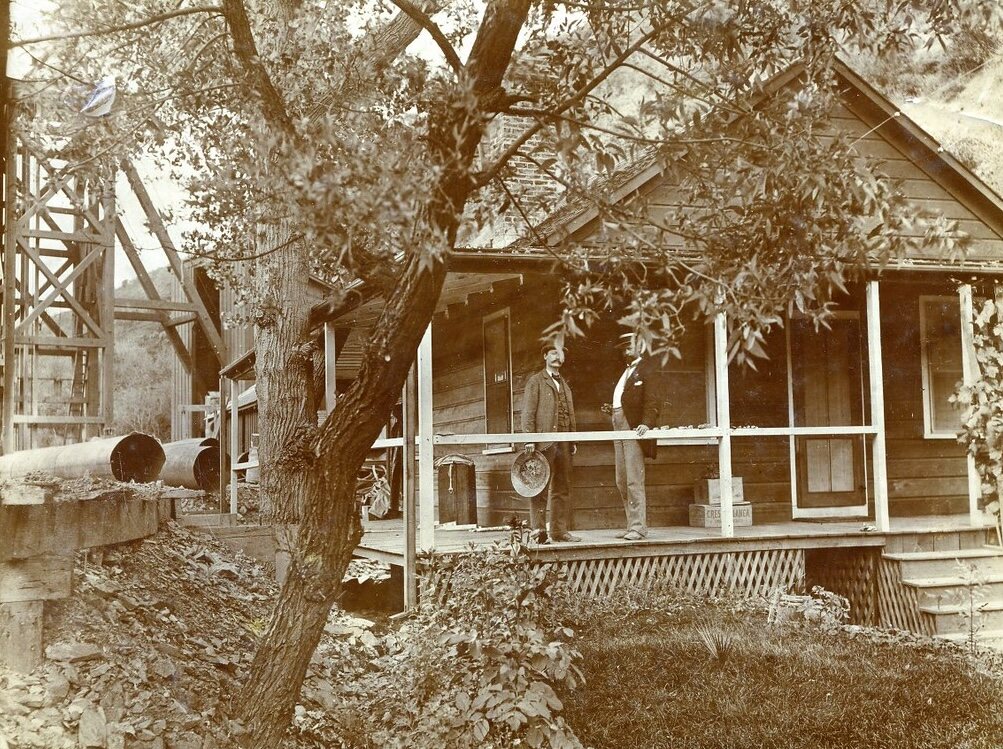
In 1899 the mill was enlarged to 100 stamps, and in 1901 a new 120-foot steel headframe was installed, with a new water-powered hoist works across Gwin Mine Road from the headframe. Water to power both the hoist works and the mill was purchased from the “Mokelumne Hill and Campo Seco Canal and Mining Company.” The Gwin now employed nearly 100 men, and the town of Paloma was expanding rapidly — with its own school and post office, along with several bars and other businesses.
Things looked bright for the Gwin Mine through 1905, when a three-year drought began to restrict the water power available to run the hoists and mill. The shaft had already been deepened to the 2,400-foot level with decent results. Even without enough power to operate normally, exploratory drilling and assaying continued down to the 2,800-foot level, on the expectation that the Gwin would reopen once there was sufficient water to resume full operations.

As the drought stretched into its third year, the situation deteriorated. The Gwin Mine had paid very handsome dividends to its stockholders but had not built a sufficient reserve to carry the mine through hard times. Having already made substantial profits, the owners were reluctant to reinvest with the water situation so uncertain. The ore grade had also dropped before the drought began, and the newer, higher-grade ore shoots found at the 2,800-foot level could not be mined without water. To make matters worse, the water supplier threatened to sue the owners over non-payment for water already delivered, and proved unwilling to negotiate terms for payment — even though the Gwin was by far its largest customer.
For these reasons, the order came down from San Francisco to remove the equipment and close the mine in August 1908.
“It was never intended to close the mine permanently, but it was more economical to avoid the expense of pumping and preserve the timbers from decay to allow the mine to fill with ground water.” Frederick F. Thomas, August 30, 1919
Over its lifetime, the Gwin Mine Development Company milled 984,442 tons of ore and produced just over 275,000 ounces of gold — worth more than $1.1 billion in 2026 dollars. The Gwin Mine never reopened; the post office closed in 1908, and the town of Paloma began to shrink as the jobs that had sustained it disappeared.


This section contains only a brief summary of the Gwin Mine’s history during this period. The amount of historical documentation — including period articles, photographs, technical reports, and GMDC internal company letters and records — is substantial. If you wish to explore the Gwin’s history further, the best place to start would be the article written by geologist and author W.P. (Bill) Fuller, first published in the January 1968 issue of the Las Calaveras quarterly bulletin, produced by the Calaveras County Historical Society. We hope to make additional documents available here in the future.
We also wish to thank the CCHS, which has accumulated a tremendous amount of Calaveras County historical information and has graciously shared their files relating to the Gwin Mine with us.
Honoring the Past, Building the Future
Today, we carry that legacy forward — honoring the generations who worked this ground while working responsibly toward a sustainable future that will benefit our community for years to come.